In the fast-paced world of global business and high-stakes advocacy, the way you present yourself is often the first communication sent before a single word is spoken. Recent observations of the Princess of Wales during her high-profile mission to Reggio Emilia, Italy, provide a masterclass in professional styling. By shifting the focus from traditional, ornate “royal” fashion to a modern, executive aesthetic, she has demonstrated how strategic choices in color, silhouette, and personal branding can enhance one’s authority, project approachability, and signal deep respect for one’s environment.
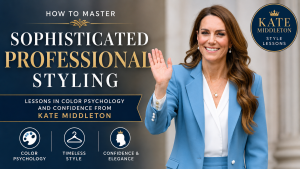
For professionals aiming to refine their own public persona, the “executive look” is not merely about wearing a suit; it is about the psychology behind the attire and the intentionality of every accessory. Mastering this requires a transition from trend-chasing to developing a signature style that communicates competence and emotional intelligence.
The Strategic Use of Color Psychology in Professional Settings
Color is the most immediate visual cue humans process. In professional settings, shades are not neutral; they carry deep-seated psychological associations. During her trip, the choice of an azure blue suit was far from accidental. Azure is a derivative of blue, a color universally recognized in color psychology as a symbol of intelligence, reliability, loyalty, and calm.
When you are preparing for a critical business meeting, an international presentation, or a networking event, the color of your attire sets the psychological baseline for the interaction. Research indicates that darker shades of blue can command respect and signal leadership, while lighter, brighter blues—like the azure chosen by the Princess—convey a sense of openness and “executive accessibility.”
To apply this to your own career, consider these guidelines:
-
Identifying Your Narrative: If your goal is to appear as a leader who listens, softer, calm tones like cream, beige, or soft blues are effective. If your goal is to project dominance and authoritative decision-making, gravitate toward navy, charcoal, or bold, crisp silhouettes.
-
The Monochromatic Advantage: A key takeaway from recent high-level executive styling is the move toward monochromatic looks. Wearing one color from head to toe creates a streamlined, vertical line that emphasizes posture and presence. It minimizes visual “noise,” allowing your audience to focus on your facial expressions and your message rather than your clothing.
-
Honoring the Context: Great style is also about cultural and situational awareness. By opting for a color that nodded to the host country while avoiding overt “flag-waving” or obvious local branding, she achieved a balance of respect and professional independence. In your own work, researching the professional culture of your partners or clients before a meeting—and dressing to align with that culture without losing your personal brand identity—is a hallmark of high emotional intelligence.
Building a Personal Brand Through “Executive Minimalism”
Modern professional styling is moving away from excess. The era of cluttered accessories and overly decorative attire is giving way to “executive minimalism.” This is the practice of choosing quality over quantity and ensuring that every element of your outfit serves a purpose.
For professionals, this means building a capsule wardrobe that functions under pressure. The strategy observed in Reggio Emilia—maintaining a polished look across multiple engagements without unnecessary changes—speaks to the importance of being “ready for business” at all times.
The Core Principles of Executive Minimalism:
-
The Fit is Supreme: A moderately priced garment that is perfectly tailored will always outshine an expensive designer item that fits poorly. Investment in a local tailor is the single most effective way to elevate your professional image.
-
Significance in Accessories: Every accessory should carry a narrative or a function. Whether it is a classic top-handle bag that keeps your documents organized or a piece of jewelry that carries personal meaning—such as the initials of those who drive your passion—your accessories should tell a story of who you are as a person, not just what you own.
-
Consistency as a Strategy: Developing a “uniform” or a signature look—such as the preference for specific blazers or smart flats—reduces decision fatigue. When you are not worried about your attire, you have more mental bandwidth to dedicate to your core objectives, whether that is early childhood education, project management, or global commerce.
Integrating Personal History into Professional Presence
One of the most profound aspects of the Princess’s recent appearance was the visual symmetry created between her current mission and her past experiences. By re-wearing a striped blazer that had featured in a significant public update regarding her personal health journey, she created a bridge between her human experience and her professional identity.
For many professionals, there is a temptation to separate the “personal” from the “professional” entirely. However, the most compelling leaders are those who bring their authentic, human selves to their work. Acknowledging your history—through small, subtle nods in your attire or accessories—creates a sense of resilience and depth that resonates with colleagues and clients. It tells a story of survival, growth, and continuity.
The Role of Emotional Intelligence in Professional Growth
Ultimately, the goal of sophisticated styling is to facilitate better human connections. When you look the part, you feel more confident; when you feel confident, you communicate more clearly. This cycle of confidence is the foundation of professional growth.
The reception observed during this trip highlights a crucial business truth: when you are focused on your “passion projects” rather than just your appearance, your energy shifts. People are drawn to those who are “composed and happy doing what they love.” Your wardrobe should not be a mask; it should be a tool that allows you to perform your best work with ease and joy.
Conclusion: Elevating Your Professional Trajectory
Mastering sophisticated professional styling is a lifelong pursuit, not a one-time change. It involves the constant calibration of color, fit, and intent. By learning from the strategic choices of global figures who operate under the intense scrutiny of the international stage, you can apply these same principles of executive presence to your own life. Whether you are leading a small team or operating on a global scale, remember that your image is a resource—use it to communicate your values, your competence, and your commitment to your goals.
Frequently Asked Questions (FAQs)
Q: Does color psychology really matter in a modern, casual workplace? A: Yes. Even in workplaces with casual dress codes, the colors you choose influence how your colleagues perceive your energy levels and trustworthiness. Choosing colors that project calm and competence can help you stand out as a reliable professional, regardless of the dress code.
Q: How do I build an executive wardrobe without spending like a royal? A: Focus on “capsule dressing.” Buy fewer, higher-quality items in neutral colors that can be mixed and matched. Invest the money you save on these staples into professional tailoring, which will make even affordable clothing look bespoke.
Q: What is the benefit of having a “signature style”? A: A signature style—a consistent approach to your outfits—reduces decision fatigue. It allows you to spend your time and mental energy on your work instead of stressing about what to wear in the morning. It also makes you more memorable to your professional network.
Q: How can I balance professional attire with personal comfort? A: Comfort is essential for confidence. If you are uncomfortable in your clothing, it will show in your body language. Choose silhouettes and materials that allow you to move freely. The trend toward smart flats and structured but comfortable blazers is a perfect example of prioritizing function without sacrificing a polished, executive appearance.
Q: How can my clothing reflect my work values? A: Consider the “why” behind your outfit. If your work is rooted in nature or education, earth tones and natural fabrics can subconsciously signal your values to those you meet. Use your clothing as an extension of your professional philosophy.