
The recent appearance of the Princess of Wales at the 125th-anniversary reception for Cancer Research UK at St James’s Palace offered more than just a glimpse into royal duty; it provided a masterclass in emotional intelligence and personal presence. Clad in a striking red polka dot midi dress, the Princess moved through the room with a grace that felt both authoritative and deeply empathetic.
For many, public scrutiny can be paralyzing. Yet, witnessing the Princess engage with figures like TV presenter Davina McCall and the family of the late Dame Deborah James, it becomes clear that confidence is not the absence of vulnerability, but the ability to harness it. Whether you are navigating a high-stakes professional meeting, a social gathering, or a challenging period in your personal life, the way the Princess navigated this event provides actionable lessons on how to command a room while remaining approachable.
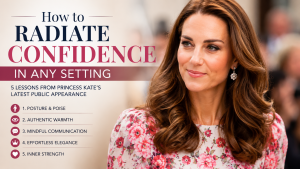
Here are five transformative lessons on radiating confidence inspired by her latest public engagement.
1. Use Your Attire to Anchor Your Intent
Fashion is often viewed through the lens of aesthetics, but in the context of professional and personal growth, it serves as a powerful psychological tool. The Princess chose a bold red dress for the cancer reception. Red is a color of energy, passion, and, significantly, strength. By opting for a vibrant hue, she signaled engagement and vitality.
Confidence often begins with how you present yourself to the world. When you choose attire that makes you feel “ready,” you are effectively priming your brain for the tasks ahead. This is known as “enclothed cognition”—the theory that the clothing we wear influences our psychological processes. To radiate confidence in any setting, choose outfits that align with the version of yourself you wish to project. When you feel put-together, your body language naturally shifts, becoming more upright and open, which in turn influences how others perceive your competence.
2. Practice Active Listening as a Power Move
The most striking aspect of the footage and reports from the evening was not the regal status of those in attendance, but the quality of the interaction. When speaking with Davina McCall, who has been open about her own journey with a brain tumour and breast cancer, the Princess was fully present. She did not merely exchange pleasantries; she engaged in a “wonderful exchange” that required genuine focus.
Many people mistake confidence for the ability to dominate a conversation. In reality, the most confident individuals in any room are those who listen intently. Active listening—maintaining eye contact, acknowledging the speaker’s points, and responding with empathy—creates an immediate bond. It demonstrates that you are secure enough in your own value that you do not need to fight for the spotlight. By focusing entirely on your interlocutor, you make them feel seen, which is the ultimate mark of a charismatic and confident leader.
3. Embrace the Power of Shared Vulnerability
One of the most poignant moments of the evening was the discussion surrounding the importance of public transparency regarding health struggles. Davina McCall remarked on the liberation she felt in sharing her journey, despite the initial desire to keep it private. The Princess, having navigated her own health challenges over the past year, clearly understands this delicate balance between privacy and advocacy.
Confidence is often misunderstood as the need to be “bulletproof.” However, true confidence involves the courage to be authentic. When you are willing to acknowledge your challenges or discuss your experiences with honesty, you lower the barrier between yourself and others. This creates a bridge of relatability. In professional environments, admitting that a project was difficult or that you learned from a setback does not diminish your authority; it enhances it by showing human maturity and resilience.
4. Cultivate a “Service-First” Mindset
The event at St James’s Palace was centered on the 125th anniversary of a charity dedicated to the prevention and treatment of cancer. The Princess’s participation was not a performance; it was a commitment to a cause larger than herself. When your focus is diverted toward a goal—supporting a team, helping a client, or advancing a mission—your internal self-consciousness begins to fade.
Self-consciousness is the enemy of confidence. When we worry about how we are perceived, we become stiff and performative. By shifting the focus from “How do I look?” or “Am I doing this right?” to “How can I contribute here?” or “How can I support this person?”, you tap into a deeper well of energy. The Princess’s ability to remain composed while discussing bittersweet memories with the family of Dame Deborah James shows that having a clear sense of purpose provides a scaffold for your emotions, allowing you to remain steady in difficult circumstances.
5. Master the Art of the Graceful Transition
Returning to a full schedule after a health sabbatical is a significant transition. The Princess has navigated her return to public duties—including recent international travel and host duties—with a measured, steady pace. This highlights the importance of pacing yourself. Confidence is not about sprinting to the finish line; it is about maintaining a sustainable rhythm that allows you to perform at your best.
In your own life, acknowledge that transitions are part of the journey. Whether you are returning to work after a break, starting a new project, or stepping into a new leadership role, allow yourself the grace to find your footing. A confident person does not need to be perfect immediately; they need to be consistent. By focusing on steady progress rather than immediate perfection, you build long-term resilience that will carry you through any environment.
Conclusion: Confidence is a Habit
The grace displayed by the Princess of Wales is not innate; it is a discipline. It is built through years of practice, a commitment to duty, and a profound respect for the people around her. By anchoring your intent, listening actively, embracing your human experience, serving a higher purpose, and managing your transitions with grace, you can cultivate a level of confidence that is not only visible to others but felt within yourself.
As we look at her return to the public stage, the biggest takeaway is simple: confidence is found in the quiet moments of connection and the steady resolve to keep moving forward, regardless of the challenges life presents.
Frequently Asked Questions (FAQs)
Q: How can I build confidence if I am naturally shy in public settings? A: Start by shifting your focus from yourself to others. When you enter a room, look for ways to be helpful or engage others in conversation. This takes the pressure off your own internal dialogue and helps you integrate more naturally into the group.
Q: Is it okay to be vulnerable in a professional environment? A: Yes, but it should be done with intention. Vulnerability at work is most effective when it focuses on lessons learned, growth, or mutual challenges. It humanizes you and can help build trust with colleagues.
Q: How do I choose the right “look” to boost my confidence? A: Confidence-boosting attire is subjective. The key is to choose clothing that makes you feel prepared and reflects the role you want to play. When you feel comfortable and polished in your clothes, your posture improves, and your brain receives a signal that you are ready for the task at hand.
Q: Why is active listening considered a confidence-building skill? A: People who are secure in their own abilities do not feel the need to fill the silence or talk over others. By practicing active listening, you signal to others that you are comfortable in your own skin, which ironically makes others view you as more confident and capable.
Q: What is the best way to handle a major transition in life or work? A: Focus on “steady progress” rather than immediate perfection. Break your responsibilities down into manageable steps, prioritize your health and well-being, and give yourself the time to adjust to your new environment. Consistency is far more powerful than a sudden, forced attempt at normalcy.