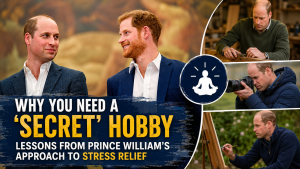
In the high-pressure world of modern life, the concept of a private sanctuary is more important than ever. Whether you are balancing the demands of a high-profile career, the complexities of parenthood, or the relentless pace of daily responsibilities, the need for an outlet—something uniquely yours—is a cornerstone of mental health. Recent insights into the life of Prince William, who has long navigated the scrutiny of the global stage, reveal a surprisingly relatable strategy for maintaining equilibrium: the cultivation of a secret, personal hobby.
Despite his position as the future King and the intense public interest surrounding his every move, the Prince of Wales continues to engage in his passion for motorbikes. He recently shared that he still finds time to ride, albeit “quietly” and “in disguise.” This practice serves as a masterclass in setting boundaries, protecting one’s mental space, and finding joy in the small, controlled corners of life. By examining this approach, we can extract valuable life tips on how to build our own version of a “disguised” hobby to manage stress and foster professional longevity.
The Psychology of the Private Outlet
Psychologists have long argued that individuals in high-stress roles require a psychological “disconnect” to prevent burnout. When every aspect of your life is subject to public or professional scrutiny, your sense of self can become fragmented. A private hobby acts as a container for your identity outside of your job description.
For Prince William, the motorbike represents a vestige of a younger, more autonomous self. It is a hobby that does not require him to be a royal, a father, or a public servant. When he dons a disguise to ride, he is essentially stripping away the expectations placed upon him by the world. For the average professional, your “disguise” might not be a literal helmet or a change of outfit, but it is the act of engaging in an activity where your performance is not being measured by a manager, a spouse, or a social media audience.
Lessons in Boundary Setting
One of the most significant takeaways from the Prince’s approach is the necessity of protecting one’s personal time. Even within a marriage or a family unit, there are different needs and tolerances for risk or activity. The admission that his hobby “fills her with horror” highlights the reality that partners may not always understand or share our passions.
Learning to carve out space for a hobby—while respecting the concerns of those around you—is an essential skill in emotional intelligence. It requires open communication and the maturity to acknowledge that while your partner may be worried, your personal mental health requires a specific type of engagement. The “disguise” here represents a compromise: you continue to feed your soul, but you do so in a way that is respectful of the comfort levels of those you love.
From Thrill-Seeking to Mindful Escapism
The Prince’s journey with motorbikes is a case study in evolution. Like many people, his relationship with his passion has changed as his responsibilities have grown. From the high-speed thrill of his youth to the more measured, “quiet” rides of his forties, he demonstrates how a hobby can mature with you.
Many people abandon their hobbies once they become busy or start a family, believing they no longer have time for “fun.” This is a dangerous oversight. Instead of dropping the hobby entirely, the key to sustainability is adjustment. If you used to love intense sports, perhaps you shift to a more moderate version. If you loved creative writing but have no time, perhaps you switch to journaling. The goal is not the intensity of the experience, but the continuity of the self-reflection and joy it provides.
Navigating Modern Challenges: When Worlds Collide
The inclusion of the Prince’s recent experience with e-scooters and the subsequent regulations at Windsor Castle offers another lesson: life will always throw obstacles in the path of your downtime. Whether it is a change in work requirements, a new regulation, or shifting family needs, there will always be a barrier to your hobby.
The ability to pivot is just as important as the ability to pursue. When the environment changes, resilient people don’t give up; they adapt. Whether it is finding a new location, a new modality, or a new way to integrate the hobby into a busy schedule, the mindset of adaptability ensures that your stress-relief strategy remains intact.
The Practical Benefits of a ‘Secret’ Hobby
Engaging in a private interest has profound physiological and psychological benefits:
-
Cortisol Reduction: Engaging in a task that is purely for pleasure helps lower stress hormones, allowing your nervous system to recover from the “fight or flight” mode triggered by daily deadlines.
-
Cognitive Flexibility: Stepping away from your primary role and doing something completely different forces your brain to shift into a different mode of thinking. This often leads to increased problem-solving abilities when you return to your main tasks.
-
Emotional Resilience: Having a space that is entirely your own provides a “fallback” position. When other areas of your life (work, family, social) feel overwhelming, you have a private sanctuary to return to.
-
Sustained Identity: A secret hobby reminds you that you are more than just your job title. This sense of self-worth is independent of external validation.
How to Start Your Own ‘Quiet’ Hobby Strategy
If you feel like you have lost yourself in the shuffle of professional and personal life, consider these steps to reclaim your time:
-
Identify Your ‘Disguise’: What is an activity that makes you feel like you are not being watched, measured, or judged? It doesn’t have to be exotic. It could be reading, woodworking, long-distance running, or even learning a new language.
-
Respect the ‘Quiet’ Aspect: There is a growing trend of “oversharing” everything we do on social media. For your hobby to be a true sanctuary, keep it private. You don’t need to post it to Instagram or tell your colleagues. Let it be a part of your life that belongs solely to you.
-
Protect Your Time: Treat your hobby with the same respect you would a mandatory business meeting. If you don’t schedule it, it won’t happen. Even if it is just 30 minutes a week, make it a non-negotiable appointment with yourself.
-
Communicate with Care: If your hobby causes concern for your family, explain why you need it. Focus on the benefits to your mental health and well-being. When others see how much calmer and more focused you are after pursuing your interest, they are far more likely to be supportive.
Conclusion
The story of the Prince of Wales and his motorbikes is far more than a headline about royal travel preferences. It is a testament to the fact that everyone, regardless of station, needs a way to escape the pressures of their reality. By choosing to ride “quietly” and “in disguise,” Prince William is practicing a form of mental preservation that is essential for anyone dealing with high-stress environments. Your hobby is not an act of selfishness; it is a vital act of self-care. It is the fuel that allows you to handle the rest of your life with grace, patience, and perspective. Find your disguise, protect your quiet time, and never underestimate the power of an interest that is kept just for you.
Frequently Asked Questions (FAQs)
Why is it important to have a private hobby that others don’t know about? A private hobby provides a sense of autonomy. It ensures that your identity is not entirely defined by your professional or family roles, which helps protect your mental health and prevents burnout.
What should I do if my partner doesn’t support my hobby? Communication is key. Explain that your hobby is a necessary outlet for your stress management. When partners see the positive impact the activity has on your mood and well-being, they are more likely to support your need for that personal time.
How can I maintain a hobby when I have a very busy schedule? Focus on micro-dosing your time. You do not need hours to gain the benefits of a hobby. Even 15 to 30 minutes of deep focus on an activity can significantly reset your brain and lower stress levels.
Is it wrong to ‘hide’ my activities? Not at all. There is a distinction between hiding for negative reasons and “hiding” to create a private sanctuary. Keeping your hobby quiet is a valid strategy for maintaining boundaries in an age where digital surveillance and social expectations are high.
How do I know if my hobby is effectively reducing my stress? If you find that you return to your professional or personal responsibilities with more patience, better focus, or a sense of renewal, your hobby is working. The sign of a good stress-relief outlet is that it leaves you feeling energized rather than drained.